
Article: What is Open-End Cotton and Why is it Cheaper?
What is Open-End Cotton and Why is it Cheaper?
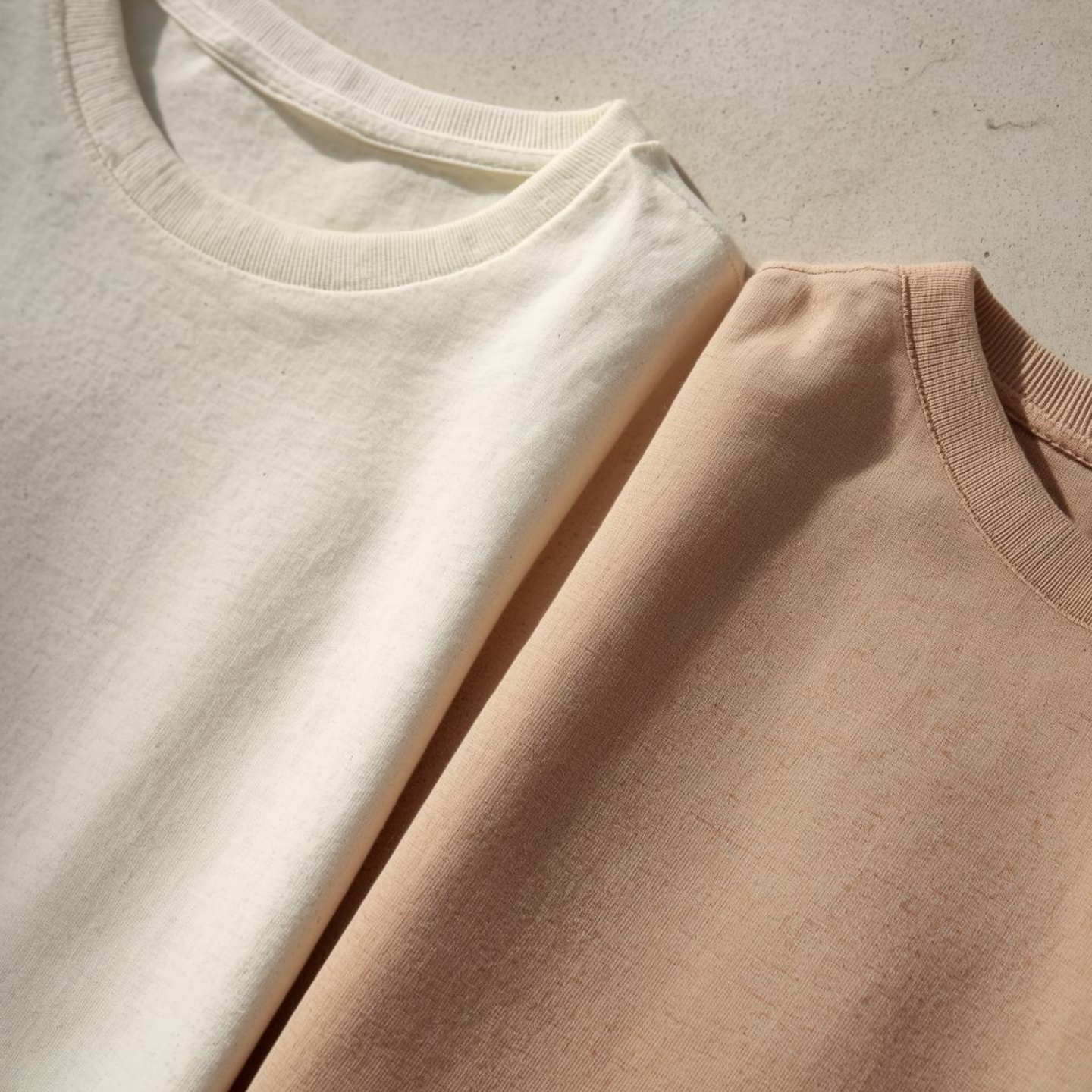
How is it that 2 different 100% cotton T-shirts can feel so different even though they have the exact same fabric composition? The answer is that there are many different cotton types, with qualities ranging from low grade to high grade. Low grade is open-end spun cotton, mid range is normal ring-spun cotton, and the high grade is combed cotton, organic cotton, and Supima cotton.
These all vary in price, which is why we can see some ridiculously low prices on Alibaba, such as $3 per T-shirt, which we can confidently say is open-end and lower quality. Although there are other factors that determine price, such as density of knit, stitch quality, and finishing, we will focus on the fabrics for this blog post.
Open-End Cotton
Open-end cotton (often called OE cotton) is made using what’s known as a rotor spinning process instead of the traditional ring-spinning method. In simple terms, the cotton fibers are cleaned, carded, and then spun inside a fast-rotating drum that twists them into yarn. Because the shorter fibers aren’t removed during this process, production is quicker and more cost-efficient.
The fabric that comes out of this method tends to feel slightly coarser and more textured compared to combed or ring-spun cotton. That’s why open-end cotton is most commonly used for basic T-shirts and large-scale production where cost plays a bigger role than softness or refinement.
Ring-Spun Cotton
Ring-spun cotton is produced using a more traditional spinning technique where the fibers are continuously drawn out, twisted, and refined into a smoother and stronger yarn. Compared to open-end spinning, this process creates a finer and more uniform thread.
The result is a noticeably softer, smoother fabric that feels more premium and durable. That’s why ring-spun cotton is often used in higher-quality T-shirts and streetwear collections.
It’s important to note that “ring-spun” describes the spinning method, not the cotton type itself. Different cotton varieties can be ring-spun, including carded cotton, combed cotton, organic cotton, Pima cotton, and Supima cotton. Ultimately, the final quality depends on the raw fibers being used.
Conclusion
Open-end cotton has its place in high-volume and budget production. However, for brands focused on building long-lasting, premium garments, it is rarely the right choice.
At Entreupia, we do not recommend open-end cotton for brands that aim to position themselves around quality and durability. Our focus is on producing clothing that lasts, both in fabric performance and in construction.
Material decisions have a direct impact on how long a garment survives in a customer’s wardrobe, how it feels over time, and even its overall environmental footprint. By guiding brands toward higher-quality cotton options and carefully selected production partners, we help ensure garments are built to endure rather than be replaced.
If you would like to learn more about how we select responsible production partners and reduce environmental impact through quality-driven manufacturing, you can read more about our efforts here.
And if you are currently developing a collection and want guidance on fabric selection, sampling, or full production coordination, you can explore how to work with us here.

Leave a comment
This site is protected by hCaptcha and the hCaptcha Privacy Policy and Terms of Service apply.